
Breaking Temporal Coupling: Design Beyond Sequence
Systems become fragile when correctness depends on invisible timing assumptions.
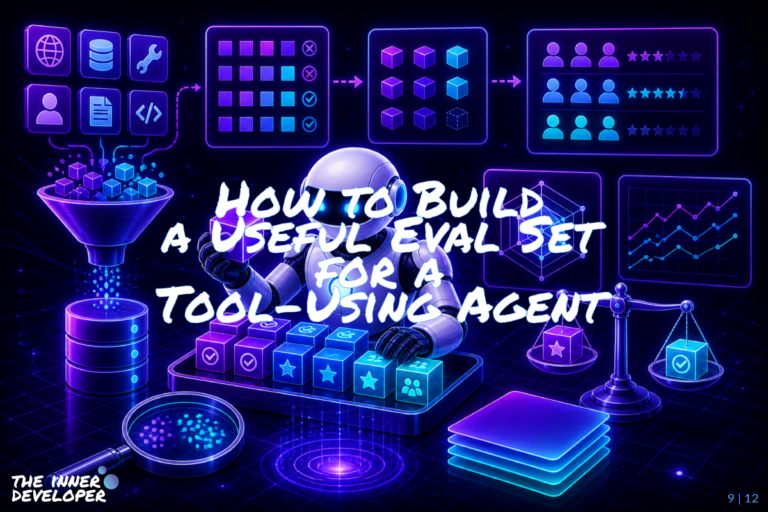
Learn how to design an eval set for a tool-using agent using trace-level evaluation, dataset splits, layered scoring, and realistic failure cases that catch regressions before production.
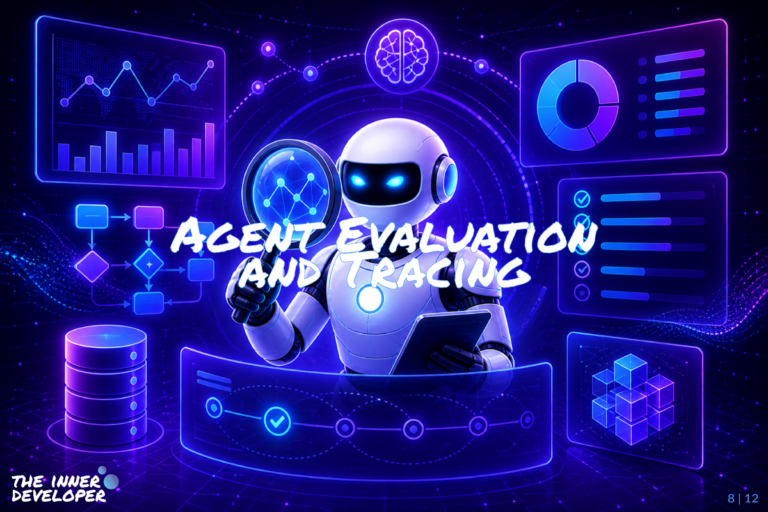
Prompting can improve a single run, but it cannot prove that an agent workflow is reliable. This article explains how traces, scorecards, offline evals, and online monitoring turn agent quality into an engineering discipline.
The less your code knows about its surroundings, the easier it is to change safely.
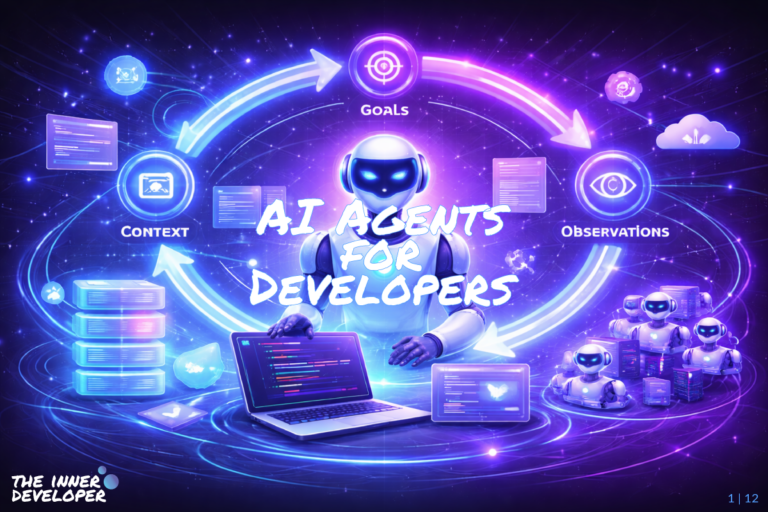
Most confusion about AI agents starts with weak definitions. This article explains the mental model that holds up in real systems: an agent is a control loop around an LLM with tools, state, and observable execution.
The best code speaks fluently in its domain.
We use cookies to improve your experience on our site. By using our site, you consent to cookies.
Manage your cookie preferences below:
Essential cookies enable basic functions and are necessary for the proper function of the website.
These cookies are needed for adding comments on this website.
Statistics cookies collect information anonymously. This information helps us understand how visitors use our website.
Google Analytics is a powerful tool that tracks and analyzes website traffic for informed marketing decisions.
Service URL: policies.google.com (opens in a new window)