
Skip to content
The Inner Developer
Exploring the craft of code and the person behind it
The Inner DeveloperThe Inner Developer
  • Home
  • About
  • Blog
    • The Pragmatic Programmer Series
    • E-Learning Standards
      • AICC
      • SCORM 1.2
      • SCORM 2004
      • xAPI
      • cmi5
    • AI Agent Engineering for Developers
      • The Agent Loop
      • Memory Management in Agents
      • Multi-Agent Systems
  • Home
  • About
  • Blog
    • The Pragmatic Programmer Series
    • E-Learning Standards
      • AICC
      • SCORM 1.2
      • SCORM 2004
      • xAPI
      • cmi5
    • AI Agent Engineering for Developers
      • The Agent Loop
      • Memory Management in Agents
      • Multi-Agent Systems

AI Agents

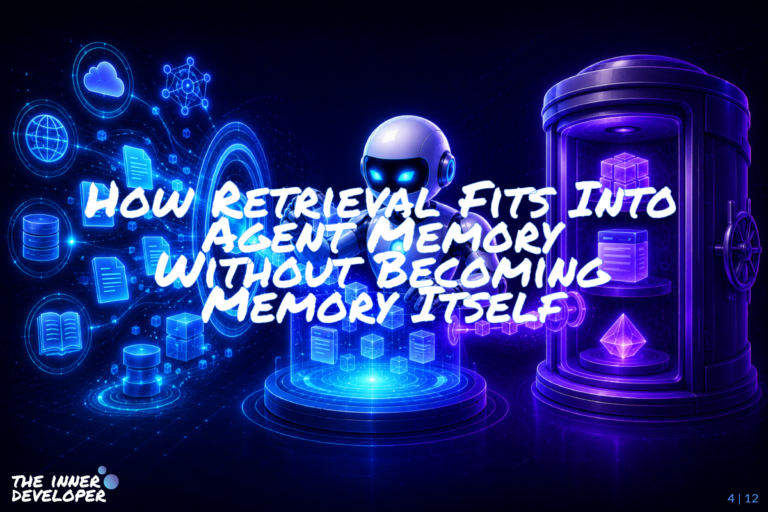
A futuristic robot stands between a glowing retrieval portal and a secure memory vault, selecting data cubes from live external sources such as documents, databases, cloud systems, and the web, while only a few chosen pieces flow into long-term storage, illustrating that retrieval supports agent memory without becoming memory itself.

How Retrieval Fits Into Agent Memory Without Becoming Memory Itself

AI Agent Engineering for Developers, Memory Management in AgentsBy Sami05.08.2026Leave a comment

Retrieval is not memory. In production AI agents for developers, retrieval should stay a read path to external systems, while memory remains a write path for learned continuity like preferences, instructions, and successful procedures.
Discover more
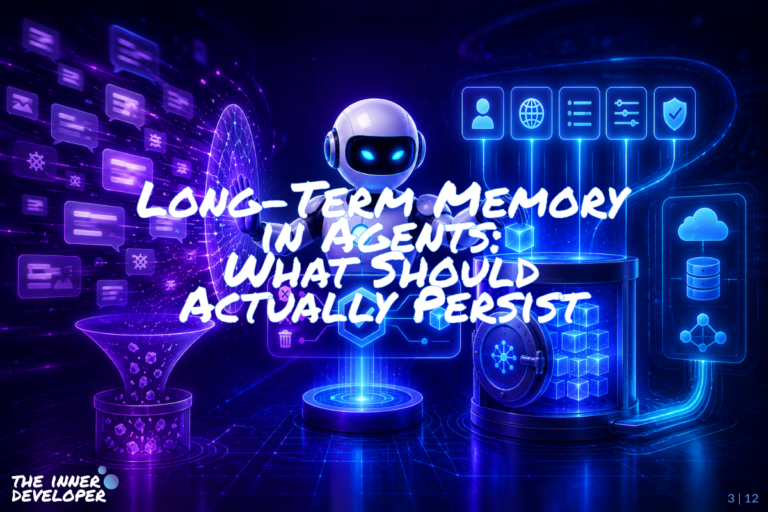
A futuristic robot carefully filters digital information, rejecting noisy chat fragments on the left while storing selected, verified memory blocks in a secure glowing vault on the right, illustrating selective long-term memory in AI agents.

Long-Term Memory in Agents: What Should Actually Persist

AI Agent Engineering for Developers, Memory Management in AgentsBy Sami29.07.2026Leave a comment

Short-term state is not a transcript. It is the working memory of the current task. This article explains how clean, structured thread state improves agent focus, reduces context pollution, and makes tool-using systems easier to debug and scale.

Discover more
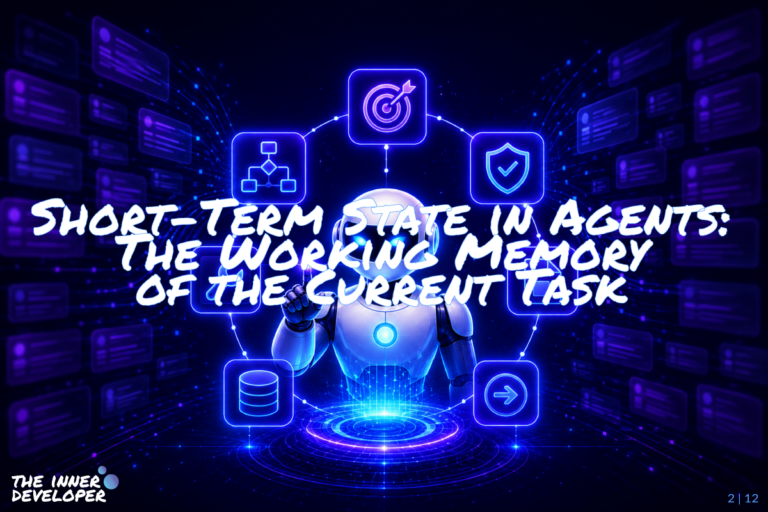
A friendly futuristic robot manages a compact ring of glowing task-state icons, while blurred transcript panels fade into the background, visualizing short-term state as focused working memory for the current AI agent task.

Short-Term State in Agents: The Working Memory of the Current Task

AI Agent Engineering for Developers, Memory Management in AgentsBy Sami22.07.2026Leave a comment

Short-term state is not a transcript. It is the working memory of the current task. This article explains how clean, structured thread state improves agent focus, reduces context pollution, and makes tool-using systems easier to debug and scale.

Discover more
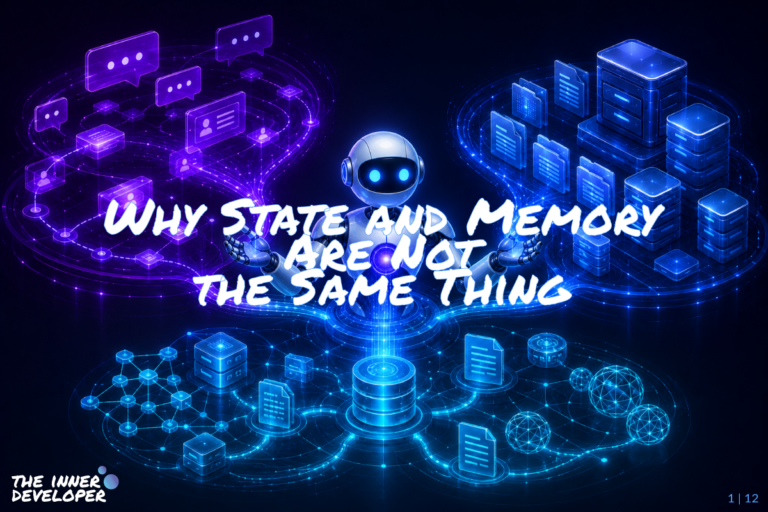
A friendly futuristic robot orchestrates three connected AI systems: flowing conversation state on the left, structured memory storage on the right, and external knowledge sources below, all linked by glowing violet, blue, and cyan data streams.

AI Agent Memory: Why State and Memory Are Not the Same Thing

AI Agent Engineering for Developers, Memory Management in AgentsBy Sami15.07.2026Leave a comment

State keeps an agent moving through the current thread. Memory persists selective information for future runs. External knowledge stays in source systems and should be retrieved on demand. This distinction matters because AI agent memory is a systems design problem, not a prompt trick.

Discover more
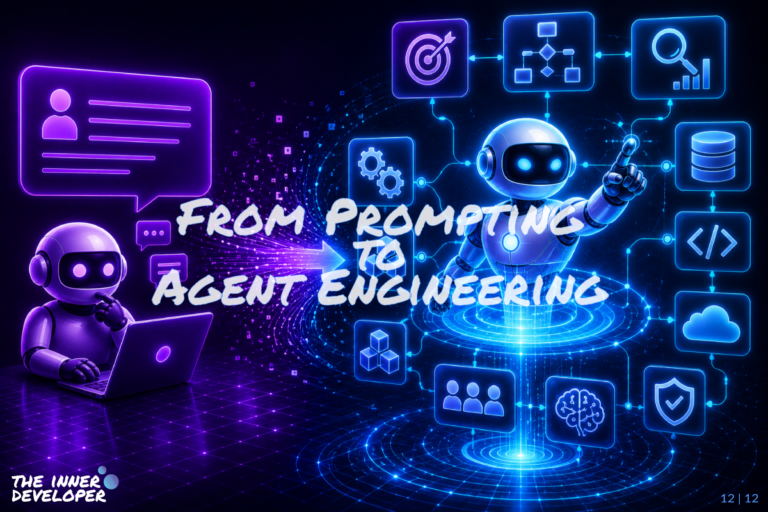
Futuristic split-scene illustrating the evolution from prompt-based AI interactions to agent engineering. On the left, a small robot works with a laptop and simple conversational interfaces, representing traditional prompting. On the right, a larger advanced AI agent operates within a network of interconnected systems, tools, workflows, memory, evaluation, and orchestration components. A glowing stream of energy bridges the two sides, symbolizing the transition from isolated prompts to structured, production-ready agent systems.

From Prompting to Agent Engineering

AI Agent Engineering for Developers, The Agent LoopBy Sami08.07.2026Leave a comment

Prompting matters, but it is only one control layer. Reliable agents come from designing the loop, validating tool use, tracing decisions, and treating runtime behavior as the real unit of quality.

Discover more
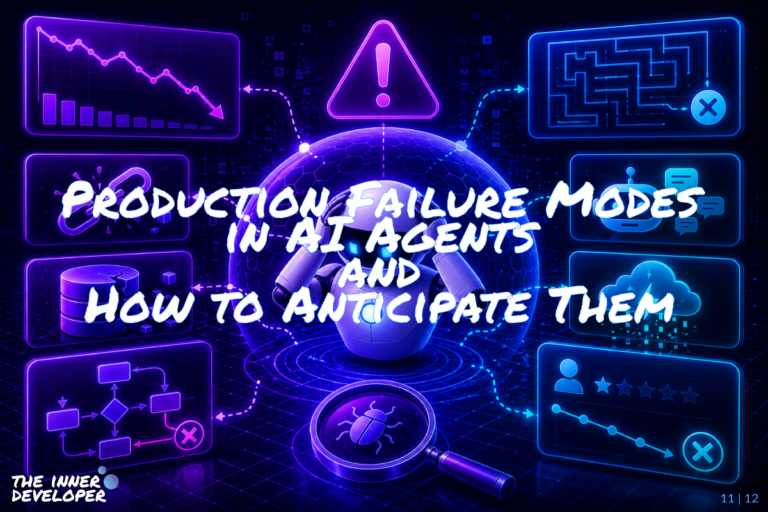
Futuristic AI operations scene showing a robot under pressure at the center of a glowing control environment, surrounded by interconnected panels displaying broken workflows, failed tool calls, degraded performance metrics, system outages, data failures, bugs, and warning indicators. Neon purple, blue, and cyan data paths connect the failures, illustrating the complexity of diagnosing and anticipating production failure modes in AI agent systems.

Production Failure Modes in AI Agents and How to Anticipate Them

AI Agent Engineering for Developers, The Agent LoopBy Sami01.07.2026Leave a comment

AI agents usually do not fail with a dramatic crash. They fail quietly through wrong tool calls, invalid arguments, retry storms, looping behavior, and weak recovery. This article explains where the agent loop breaks and how to design traces, guardrails, limits, checkpointing, idempotency, and evals that catch incidents before users do.

Discover more
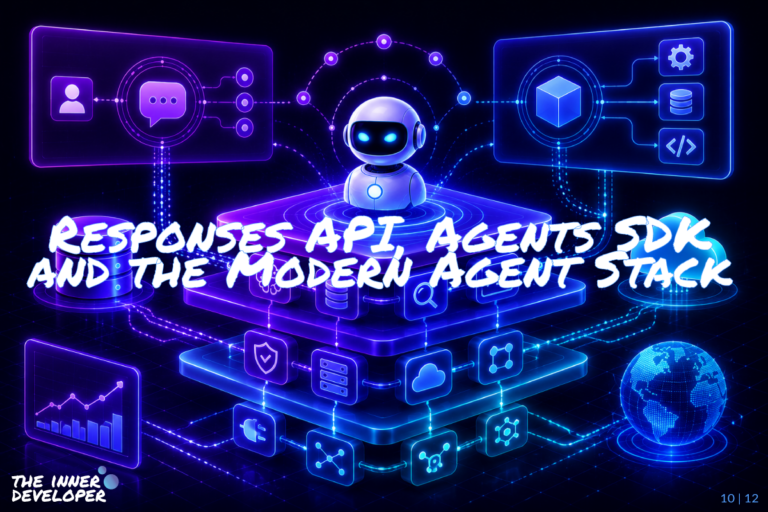
Futuristic neon-lit AI architecture scene showing a central robot assistant connected to layered platforms, cloud systems, databases, analytics dashboards, and modular service components through glowing data pathways, representing the modern AI agent stack built around orchestration, APIs, tools, memory, and runtime infrastructure.

Responses API, Agents SDK, and the Modern Agent Stack

AI Agent Engineering for Developers, The Agent LoopBy Sami24.06.2026Leave a comment

Most teams think they are choosing a framework. In practice, they are choosing what they will be able to see, control, and recover when an agent fails. This article explains the execution layer, orchestration layer, state tradeoffs, and the real architectural decisions behind a modern agent stack.

Discover more
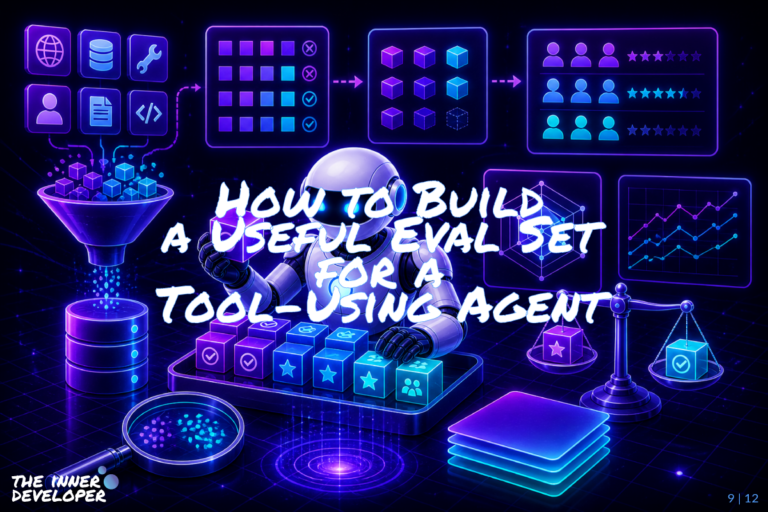
Futuristic AI robot in a neon-lit environment organizing and evaluating glowing data cubes, surrounded by holographic panels showing datasets, evaluation steps, comparison metrics, and performance charts, representing the structured process of building and validating an evaluation set for a tool-using agent.

How to Build a Useful Eval Set for a Tool-Using Agent

AI Agent Engineering for Developers, The Agent LoopBy Sami17.06.2026Leave a comment

Learn how to design an eval set for a tool-using agent using trace-level evaluation, dataset splits, layered scoring, and realistic failure cases that catch regressions before production.

Discover more
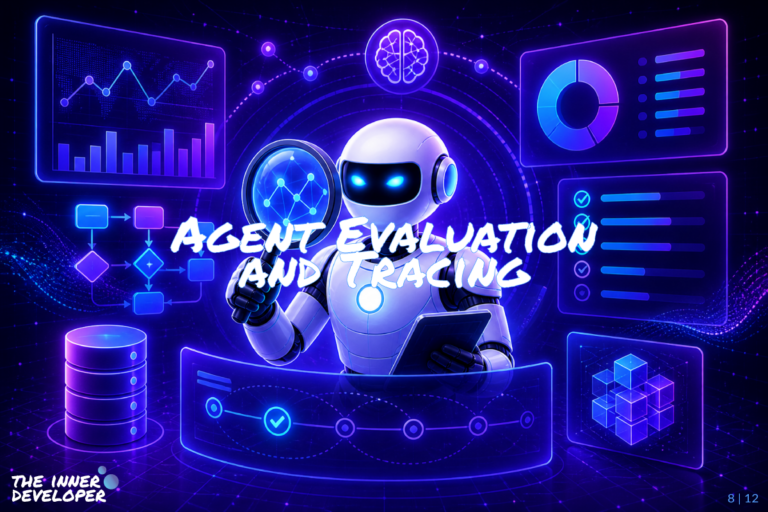
A robot surroundend by different screens and dashboards

Agent Evaluation and Tracing: Why Prompting Is Not Enough

AI Agent Engineering for Developers, The Agent LoopBy Sami10.06.2026Leave a comment

Prompting can improve a single run, but it cannot prove that an agent workflow is reliable. This article explains how traces, scorecards, offline evals, and online monitoring turn agent quality into an engineering discipline.

Discover more
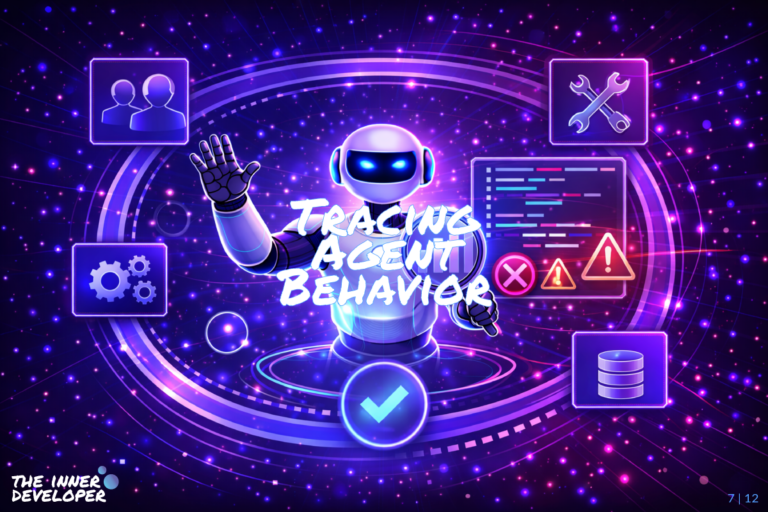
Robot surrounded by icons of settings, configuration, warning, check and database.

Tracing Agent Behavior: The Fastest Way to Understand What Went Wrong

AI Agent Engineering for Developers, The Agent LoopBy Sami03.06.2026Leave a comment

If an agent fails and you only have the final answer, you are debugging blind. This article explains how useful traces expose the exact step, tool, state, or context failure that actually broke the run.

Discover more
←123→
Explore
  • Home
  • About
  • Blog
Get in touch
Contact me today!
© The Inner Developer 2025

whoami.akkawi.ch

Go to Top