
🎯 Chapter Insight
We’ve all been there. A deployment breaks, a test fails, or a piece of code mysteriously disappears. The temptation is almost automatic: “It wasn’t me.” Maybe the tool glitched, maybe Git acted up, or maybe someone else changed something without telling you.
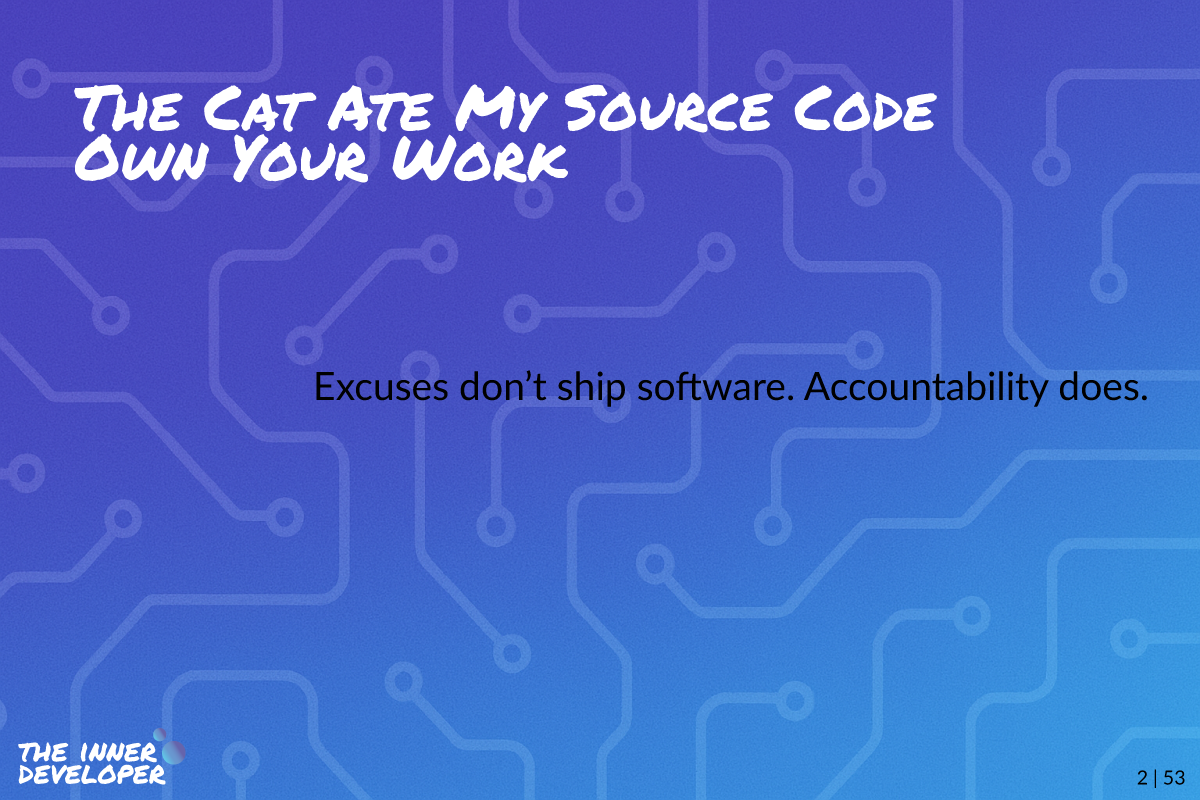
But the truth is simple: excuses don’t ship software.
Pragmatic developers own their work, including both the triumphs and the slip-ups. When things go wrong, they do not hide behind convenient explanations. They face the issue directly, communicate honestly, and learn from the experience.
Owning your mistakes isn’t about blame; it’s about integrity. It is a quiet form of courage that earns respect from teammates and builds long-term trust.
💡 Developer Lens
In a real-world project, things will go wrong. The build might fail minutes before a release. Merge conflicts might eat an afternoon. A script might wipe data in staging.
What separates good developers from pragmatic ones isn’t whether they make mistakes, but how they respond.
When you take ownership, you demonstrate reliability. You’re saying to your team, “You can count on me, not because I never fail, but because I always show up to fix it.” That’s professionalism in action.
This mindset also changes how teams collaborate. When accountability becomes the norm, trust replaces blame, and learning replaces fear. Teams stop pointing fingers and start improving systems. That shift is powerful. It turns an ordinary workplace into a healthy engineering culture.
🧭 Reflection
Be honest with yourself: what’s your first reaction when something breaks under your name?
Do you instinctively defend your actions, or do you pause to diagnose?
Would your teammates describe you as someone who takes responsibility or someone who avoids it?
Responsibility isn’t about taking the fall for everything. It’s about being transparent and solution-oriented. It’s saying, “Here’s what went wrong, here’s what I learned, and here’s how I’ll prevent it next time.”
That simple mindset shift can transform how others perceive your professionalism and how you see your own growth.
⚙️ Practical Tip
The next time something goes wrong — a failed deployment, a broken test, or a regression you missed — resist the urge to deflect.
Instead:
Acknowledge it publicly. “Hey team, this one’s on me.”
Fix it quietly. No drama, no panic. Just clear focus.
Share what you learned. Maybe a short note in Slack, MS Teams or a comment on the pull request.
Each time you do this, you are not just fixing a bug. You are strengthening trust.
And in software development, trust is the invisible framework that holds everything else together.
🔢 #2 of 53 | The Pragmatic Programmer Series
This post is part of my 53-week series summarizing The Pragmatic Programmer, one timeless principle each week, translated into modern software practice and reflection.