
🎯 Chapter Insight
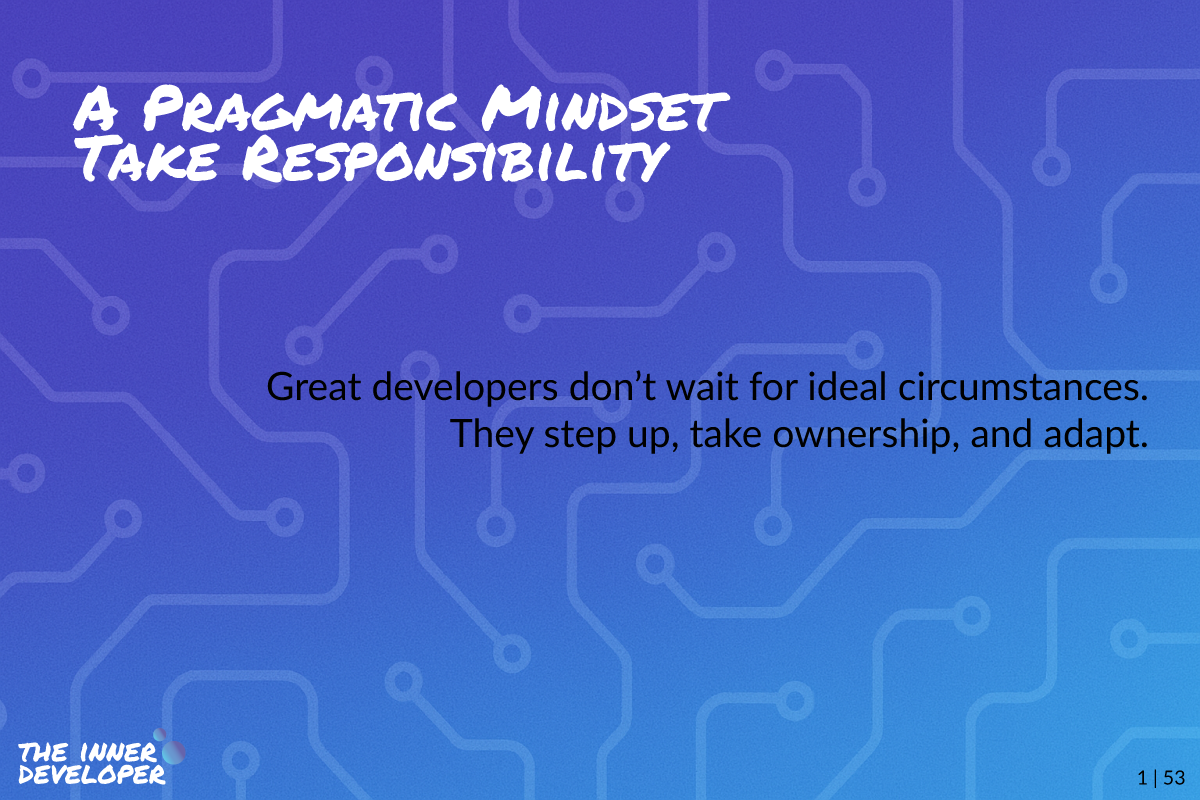
The first lesson in The Pragmatic Programmer sets the foundation for everything that follows: it’s not about syntax, frameworks, or architecture; it’s about mindset.
A pragmatic developer doesn’t hide behind excuses like “the deadline made me do it” or “that’s how the system works.” They take ownership of their craft and the outcomes of their work. Responsibility here doesn’t mean perfection; it means awareness and intentionality.
Every time we choose to learn from a mistake instead of pointing fingers, or decide to improve a messy piece of code rather than complain about it, we strengthen our professional character. The essence of pragmatism is understanding that while we can’t control every variable in a project, we can control our response, attitude, and contribution.
💡 Developer Lens
In daily software engineering, responsibility shows up in small, almost invisible decisions:
Owning a bug even if it wasn’t “technically your code.”
Asking thoughtful questions when requirements are vague instead of building on assumptions.
Communicating openly about blockers instead of silently struggling.
Proactively suggesting improvements to a process or system that slows the team down.
Taking responsibility builds trust, and trust is the true currency of any technical team. Trusted developers become go-to problem solvers. They shape culture, influence architecture, and inspire confidence. It’s how leadership begins long before anyone gives you a title.
🧭 Reflection
Pause for a moment and think:
When was the last time you caught yourself saying, “That’s not my problem”?
What if, instead of distancing yourself from the issue, you asked, “What part of this is my responsibility?”
Not to take blame, but to take ownership. The difference between those two is where real growth happens.
Responsibility doesn’t weigh you down; it empowers you. It turns frustration into curiosity, chaos into clarity, and tasks into opportunities to make a difference.
⚙️ Practical Tip
Find one small thing this week that you would normally walk past:
A broken build script.
An outdated README file.
A confusing variable name or function that’s always misunderstood.
Fix it. Improve it. Document it.
These small acts are how professionalism compounds. Over time, they become habits, and habits shape who we are as developers.
🔢 #1 of 53 | The Pragmatic Programmer Series
This post is part of my 53-week series summarizing The Pragmatic Programmer, one timeless principle each week, translated into modern software practice and reflection.