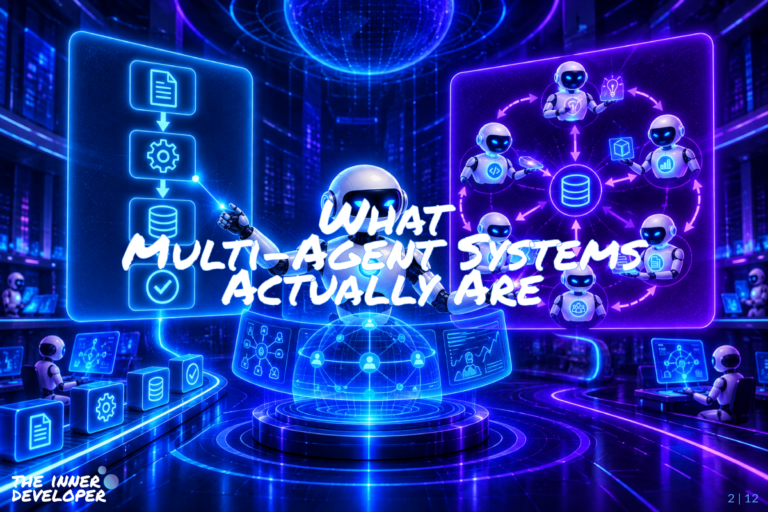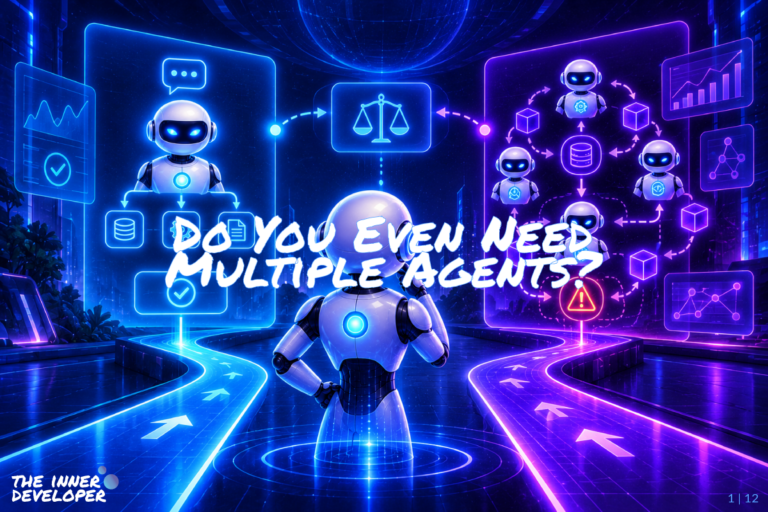

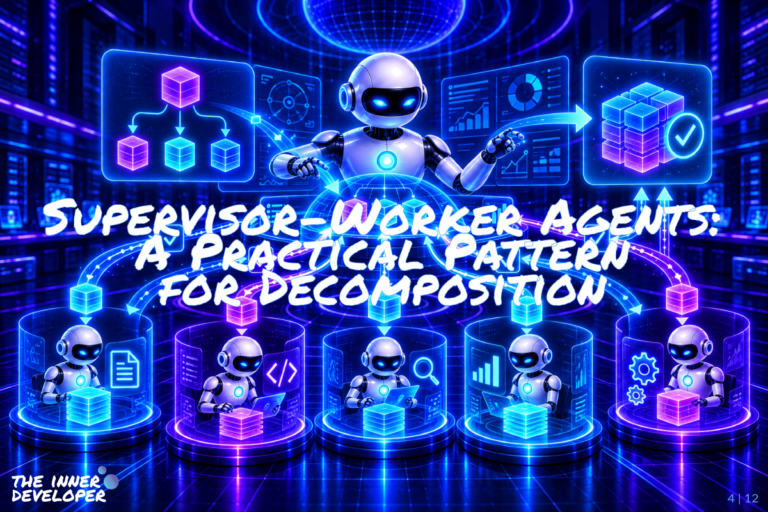
Multi-agent systems promise scalability through specialization, but they also introduce coordination complexity. This sub-series starts with a critical question: when do you actually need more than one agent?
It explores how to decompose tasks across agents, define clear roles, and design communication patterns that preserve context and intent. From handoffs and supervisor-worker models to shared state and conflict resolution, it highlights where multi-agent systems tend to break and how to design them to hold up under pressure.
A strong focus is placed on evaluation and operations, ensuring that added complexity translates into real value rather than hidden cost. Topics like latency, coordination overhead, and production observability are treated as core design concerns.
The goal is not to promote multi-agent architectures, but to build the judgment to use them only when they truly improve the system.