

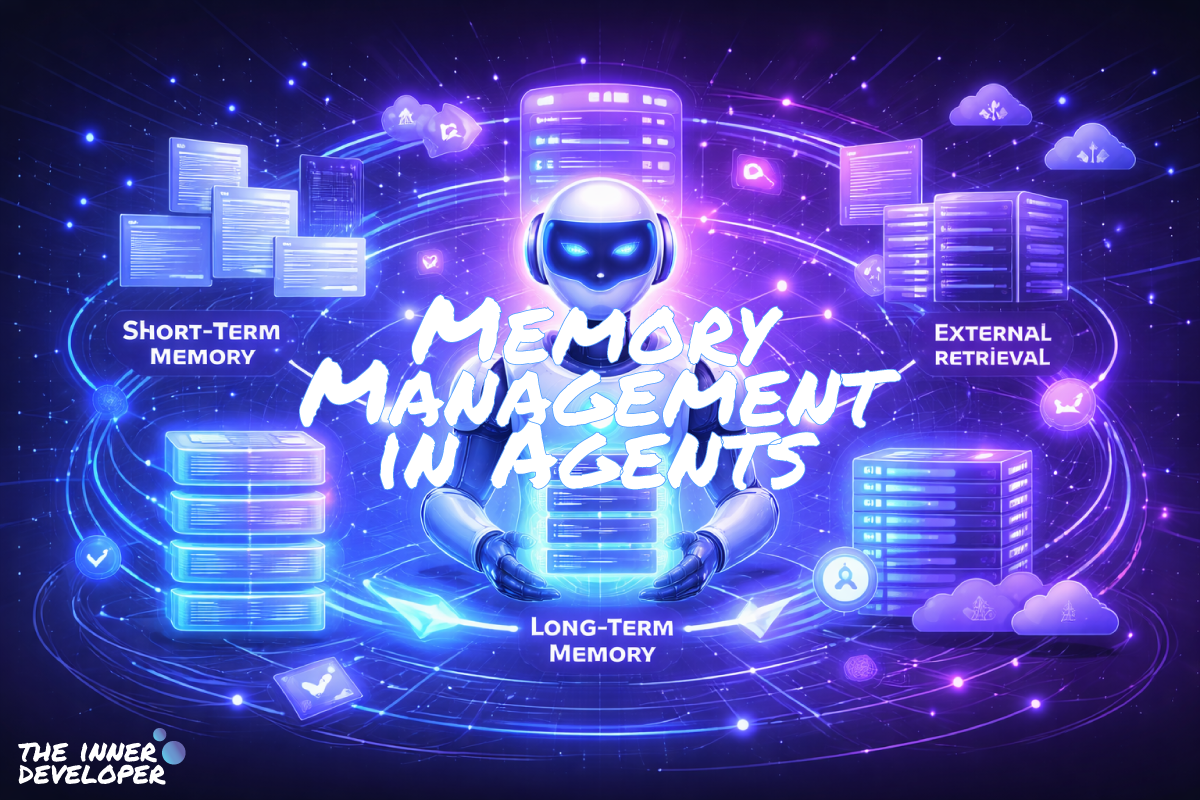
Memory in AI agents is often treated as a feature. In reality, it is an architectural challenge. This sub-series reframes memory as a set of deliberate design decisions around what to store, when to store it, and how to use it under real-world constraints like latency, cost, and reliability.
It distinguishes clearly between short-term state, long-term memory, and external retrieval, showing how each plays a different role in agent behavior. From summarization and context compaction to write policies and personalization, it explores how memory evolves over time and how it can fail.
The emphasis is on discipline. Poor memory design leads to noisy context, stale assumptions, and hidden risks. Strong memory design creates systems that are efficient, auditable, and trustworthy.
In the end, memory is not about making agents “smarter.” It is about making them more predictable and controllable.