Do Not Outrun Your Headlights: Know Your Limits
Moving fast without visibility feels productive until the cost of mistakes becomes clear.



Moving fast without visibility feels productive until the cost of mistakes becomes clear.

SCORM 2004 was not created to improve tracking. It was created to standardize progression. Sequencing moved learning flow logic from LMS vendors into the specification itself. If this layer feels complex, it is because it is architectural.
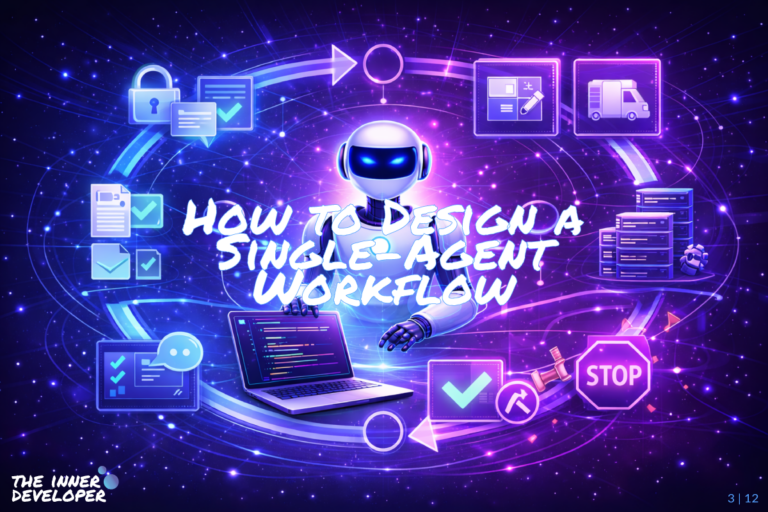
Most agent failures are not prompt failures. They happen because teams misunderstand the control loop the system is actually running. This article breaks the loop into its real runtime parts and shows why that changes debugging, reliability, and production behavior.
Most systems fail slowly when resources are mismanaged, long before they fail loudly.

Completion is not success. Success is not progress. If your LMS reporting looks inconsistent, the issue is often not the LMS. It is a misunderstanding of how SCORM 2004 separates these three concepts.
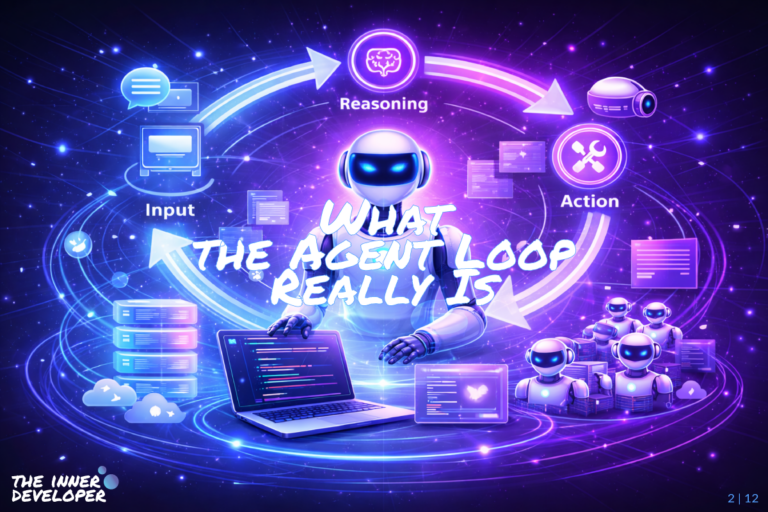
Most agent failures are not prompt failures. They happen because teams misunderstand the control loop the system is actually running. This article breaks the loop into its real runtime parts and shows why that changes debugging, reliability, and production behavior.
Assertive code fails early, clearly, and exactly where the real problem begins.
Tracking a score is simple. Tracking learning state correctly is not. SCORM 2004 introduced a data model that separates completion, success, and progress. If you misunderstand that separation, your LMS behavior will never be predictable.
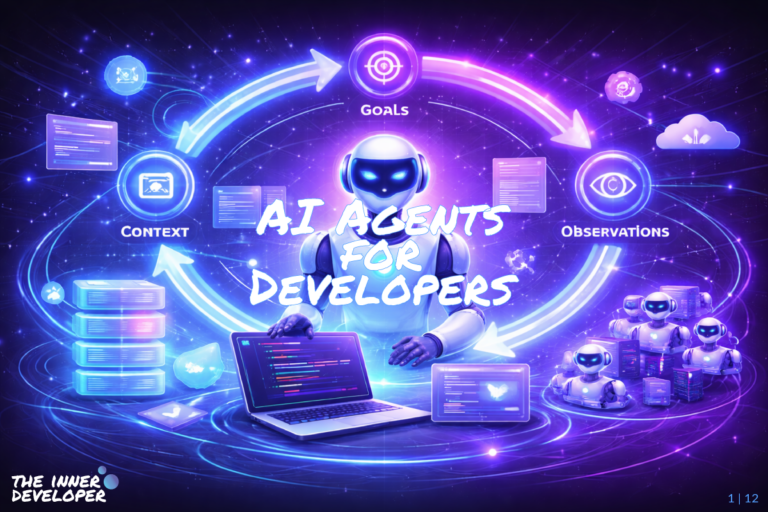
Most confusion about AI agents starts with weak definitions. This article explains the mental model that holds up in real systems: an agent is a control loop around an LLM with tools, state, and observable execution.
A loud failure today prevents a silent disaster tomorrow.
We use cookies to improve your experience on our site. By using our site, you consent to cookies.
Manage your cookie preferences below:
Essential cookies enable basic functions and are necessary for the proper function of the website.
These cookies are needed for adding comments on this website.
Statistics cookies collect information anonymously. This information helps us understand how visitors use our website.
Google Analytics is a powerful tool that tracks and analyzes website traffic for informed marketing decisions.
Service URL: policies.google.com (opens in a new window)